
W e l c o m e t o N u t r i - C h e c k N E T
Disable Preloader
  • heurope.nutrichecknet@gmail.com
Ecoife Logo Light Ecoife Logo Dark
  • The project
    • About NUTRI-CHECK NET
    • Project Partners
    • Related Projects
  • News
  • Events
    • Events
    • Final Conference
  • NUTRI-CHECK NET Platform
  • Results
    • Crop Nutrition Club
    • Deliverables
    • Practice Abstracts
    • Factsheets
    • Policy Briefs
  • Communication & Dissemination
    • Flyer
    • Newsletters
    • Press Releases
  • Contact Us
Contact Us
  • The project
    • About NUTRI-CHECK NET
    • Project Partners
    • Related Projects
  • News
  • Events
    • Events
    • Final Conference
  • NUTRI-CHECK NET Platform
  • Results
    • Crop Nutrition Club
    • Deliverables
    • Practice Abstracts
    • Factsheets
    • Policy Briefs
  • Communication & Dissemination
    • Flyer
    • Newsletters
    • Press Releases
  • Contact Us

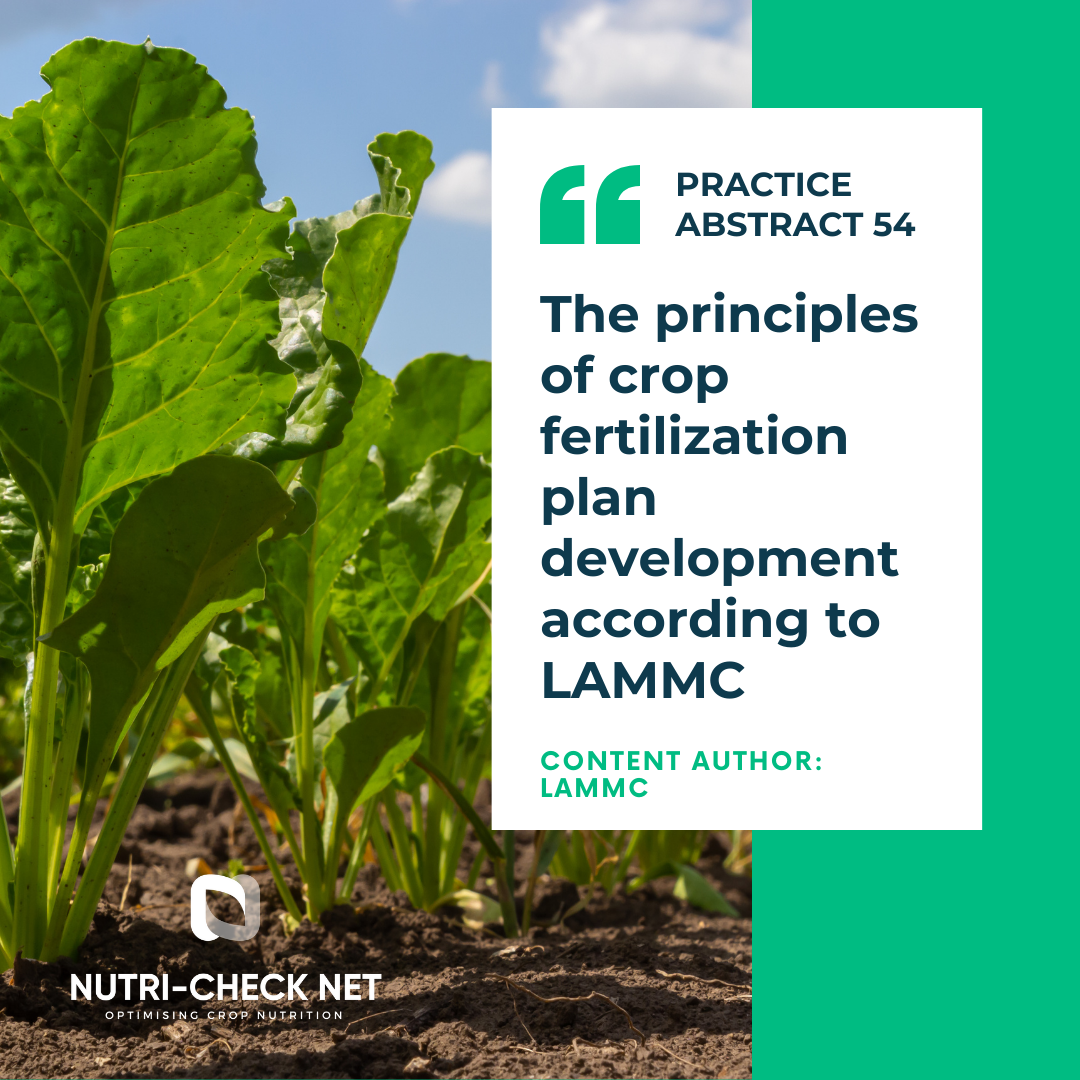
The principles of crop fertilization plan development according to LAMMC

Content Author: LAMMC

The principles of crop fertilization plan development according to LAMMC involve several key steps. First, the crop fertilization plan is based on calculating the required amounts of nitrogen (N), phosphorus (P), and potassium (K) to achieve the target crop yields, taking into account soil capabilities. If organic fertilizers are to be applied, nutrient inputs must be adjusted in relation to the rates of mineral fertilizers. The amount of nutrients needed to produce the target yields is calculated according to nationally approved recommended rates and methods. Periodic soil analyses, typically conducted every 3 to 5 years, are used to control the amount of nutrients necessary for sufficient plant nutrition. These analyses include testing soil pH, P, K, and other relevant factors in a lab. The fertilization plan must be developed or revised annually for all fertilized fields on the farm larger than 30 hectares. Additionally, the fertilization plan must be drawn up each year before manure or slurry is applied to the fields, and officials may conduct on-site checks to ensure compliance.
Funded by the European Union and UK Research and Innovation (UKRI). Views and opinions expressed are however those of the author(s) only and do not necessarily reflect those of the European Union, European Commission or UKRI. Neither the European Union, European Commission nor UKRI can be held responsible for them.

  • heurope.nutrichecknet@gmail.com
Explore
  • The Project
  • News
  • Results
  • Events
  • Communication materials
  • Contact Us
Newsletter
© 2023 NUTRI-CHECK NET. All rights reserved. By Hortelã Magenta
  • Privacy Policy

footer-icon

Welcome to NUTRI-CHECK NET Website

Before we dig in we need to know a little more about you


    I am a: