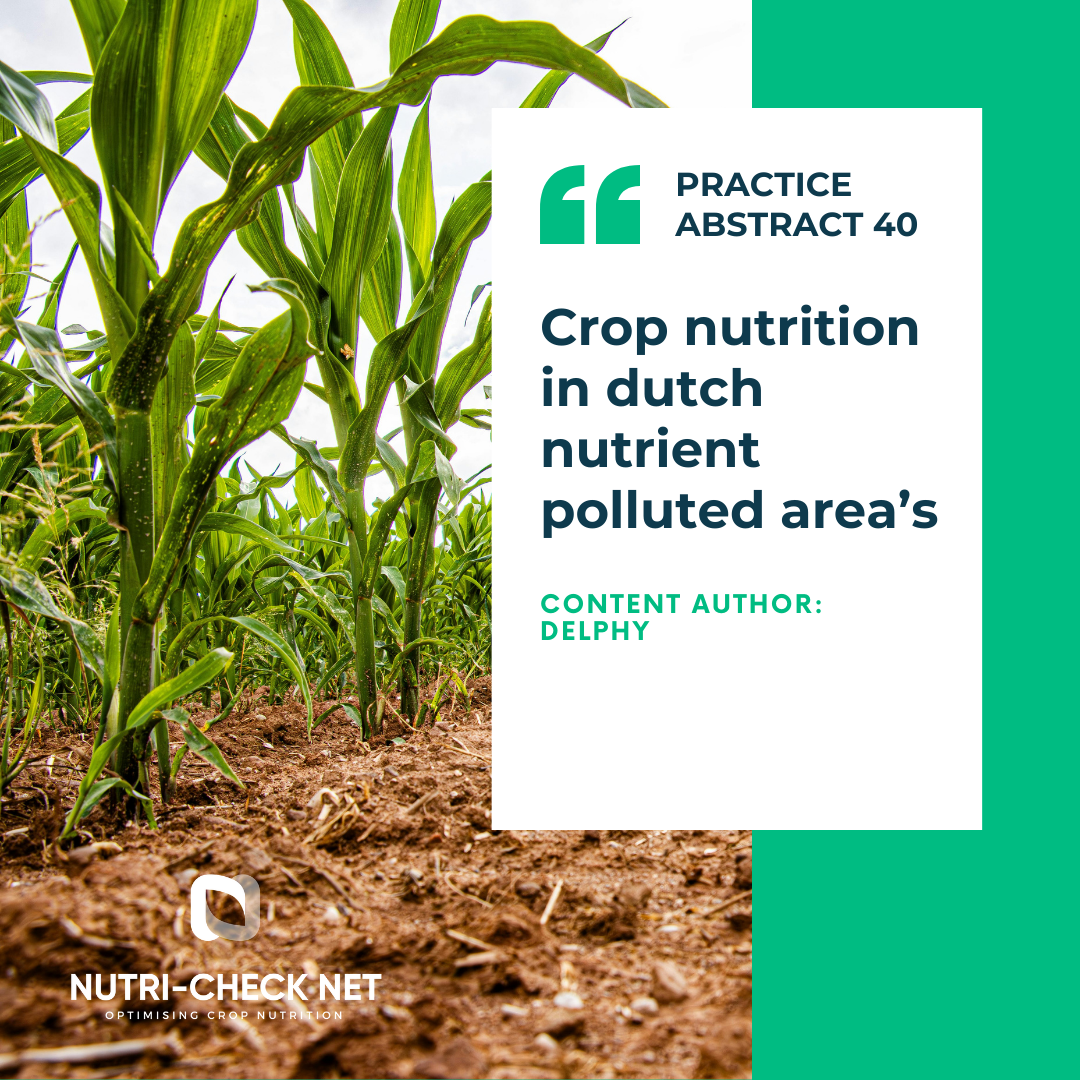
Since 2023, the Netherlands has designated nutrient-polluted areas based on surface water data showing excess nitrogen or phosphorus. In these areas, nitrogen application standards are reduced by 20%. For certain crops, this brings fertilization below agronomic minimums, leading to nutrient shortages and reduced yields. To cope, farmers apply less slurry and more solid manure combined with mineral fertilizer. Solid manure benefits soil health, but its nitrogen release is irregular and less predictable. This unpredictability causes temporary nitrogen deficits during key growth phases. As a result, precise and timely application of mineral fertilizer is crucial to compensate for these dips and maintain crop performance. This shift requires better monitoring of soil nutrient dynamics and more adaptive, data-driven fertilization strategies throughout the season. Balancing regulatory compliance with crop needs has become increasingly complex in nutrient-polluted zones, requiring both innovation and flexibility from farmers.